I think that a lot of that down spirit came from the disappointment (or more like discrepancies between expectations and reality) of Ecuador, which we had long viewed as the climax, the summit of our trip. Our volcano ascent, described previously, had been a big goal that we'd seen ourselves as training for ever since climbing that first cerro in Tupiza. Maybe all that expectation glorified the experience in our minds, and I suppose that I was expecting to be hit with some overwhelming sentiment of power and accomplishment as I reached the top, but really I was just painfully out of breath.
Before that, we really really rushed through all of highland Ecuador, in search of our dream land of glorious Ecuadorian beaches (an idea that seemed so tantalizing when set against the high cold mountains we'd wandered for all the days prior). So, we passed everything by, driven by obsession with a goal, and left San Lorenzo for Montanita, our 'promised land.'
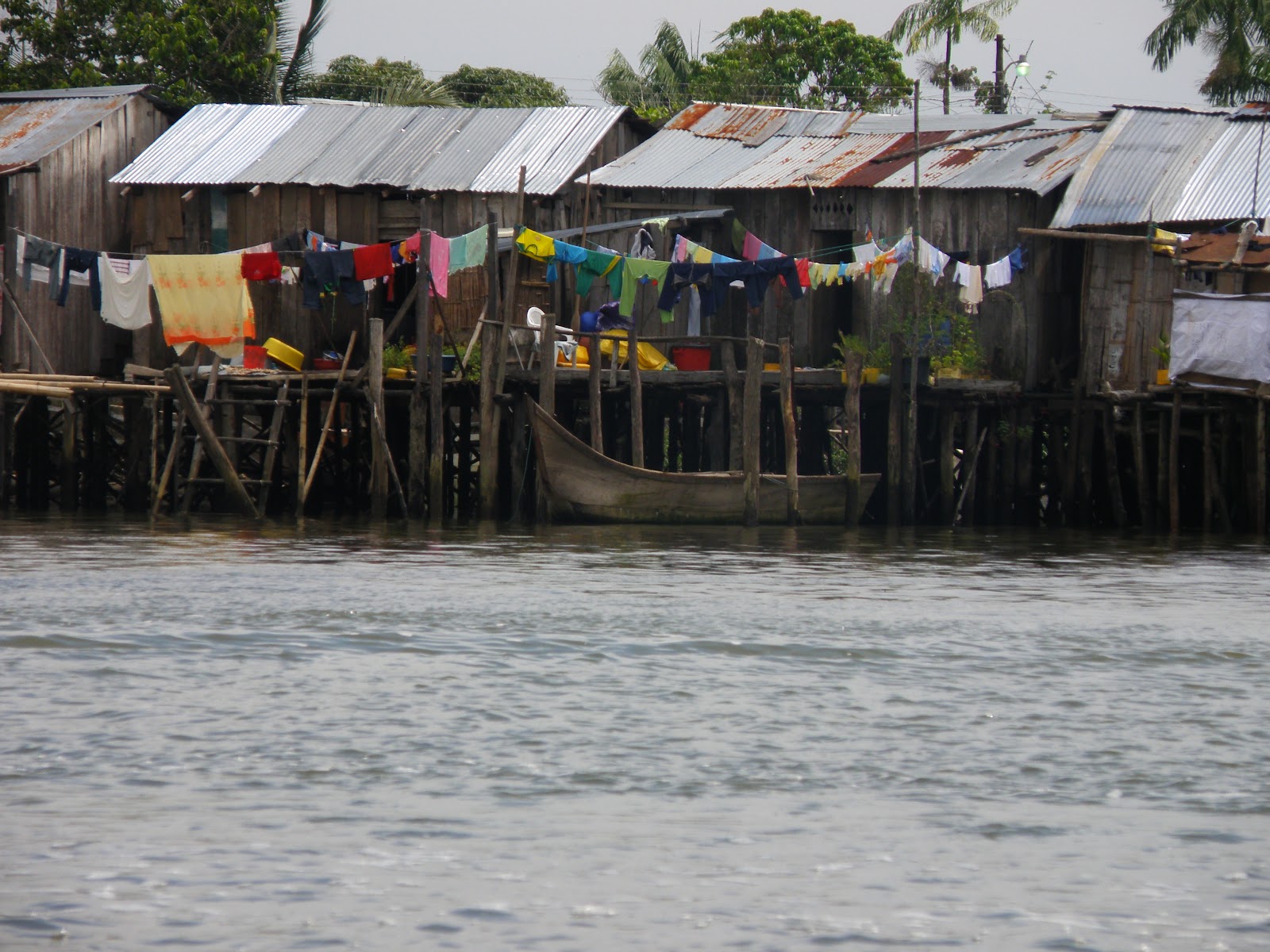
 What we found there was actually and out-of-season surf town, which we were promised was awesome for the other half of the year when the sun came out and the clouds blew away. It was overcast, slightly chilly, and wore all marks of an abandoned beach party town. That was rather disappointing for our dreamy Ecuadorian beach destination. The worst part is that San Lorenzo was hot and steamy, bearing all sorts of tropical fish and fruits on muddy roads by the side of the swampy sea - meaning we'd left a pretty awesome place behind in an attempt to spend more time in 'awesome' Montanita. So we learn. Never get so fascinated with the idea of reaching a goal that you bypass everything on the way.
  Luckily, though, we made our way farther south after just two nights and two large bags of some Ecuadorian smokeables, arriving then in Machala - the banana capital of the world (a title that had made the place another trip highlight carrying great expectations from the start). We took a long bus ride to the port, where at the edge of the city scores of tankers rallied, all flying the flags of their homelands in Africa, Asia, and all the rest of the world. We caught a small longboat at the pier, and weaving through the mangrove marsh once again, we found our dream beach. It wasn't perfect. In fact, it was pretty nasty at first. There was trash and debris strewn ashore as far as you could see, and the sun still heartily resisted making an appearance. But, we had nothing better to do but sit and wait for the weather to change, and after several hours of hopeful milling around, the air got warm, the sand took on a warm earthy glow and the water a dazzling shimmer.
 Almost as a gift to us, as if acknowledging our patience and regard for the movement of the sky, the planet decided to throw one huge gaping hole in the clouds our way, and the sun jumped through to be with us on the beach. Sitting in the warmth by palm trees on the Ecuadorian island beach was satisfying. And so I saw my disappointment in the recent past laid to rest. All it took was a little patience and pleading with the world around us to realize our month-long dream of a nice beach in the sun. Goal: accomplished.
 We saw the sun set over the sea, then over the mangroves as we took a boat back to the mainland. As the sun disappeared, and its last touches of the day dissolved into the sea, the bay took on an almost psychedelic aura. The brown murky water of the mangrove marsh put its own tweak on the reflection it threw back of the blue and purple sky where the moon had decided to come out, shining in full force, before the sun had totally gone. Behind that, the rolling Ecuadorian Andes popped in and out of the blue hazy clouds, completing a masterpiece landscape that could have been thought up by a techno spray-painter who does his work on 6th Street.
What I saw before me was as breathtaking as the greatest masterpiece on canvas, and yet its mind boggling to imagine that such a scene could be assembled so arbitrarily by the Earth.
 The next morning ended our fairly odd stint in Ecuador, as we took a lengthy assortment of buses south to Peru through Tumbes, a locality named by my Lonely Planet guide as the 'most dangerous dorder crossing in the world.' We found it not to set the standard to high, so come on undeveloped countries, step up your game.
From Tumbes, we some how managed to slither (free of charge) onto a waiting bus, and a tourist bus at that (luxury). Headed down the Peruvian coast, we passed by almost endless kilometers of beaches, glowing bronze between the coastal desert and the hot setting sun. They seemed so peaceful. I was fairly tempted to stop the bus and get off right there. But I didn't, because I have self control and I am good. A fairly comfortable night on a bus ensued.
We found ourselves once more in Lima, but if experience has taught us anything, its keep your time in Lima minimal in interest of seeing other places not perpetually engulfed in a shroud of dank gloomy smog. We caught word of some interesting towns south of Lima on the coast, so within hours of our arrival we were rolling out of town.
Now we're arriving to the present. Due completely to George's knack for making friends with anyone he ever sits by, we found ourselves last night sharing and upstairs bedroom in a relatively upscale house in Pisco, as the family cheered and watched the big boxing match downstairs. This house belonged to the owner of a tour company, and also happened to be the aunt of George's friend from the bus, earning us a VIP stay in an actual house. Sweet.
This morning, we were made breakfast, then went out with the idea of taking a boat to some islands of particular interest, except we never did because, according to the coast guard equivalent, ''the sea was moving."
So, we headed farther south, landing us in another one of those seen-it-in-a-book-but never-expected-to-actually-be-there-places. It was the sand dune desert of southern Peru - an entire landscape forged exclusively by monstrous piles of powder-soft sand nudging and rolling into each other, stretching out to the edge of the visible world. I was on Tatooine.

 It was almost hard to believe it was real, and harder yet to believe that I was standing right there amongst such a marvelous yield of the land. As the sand blew up in an evening breeze and shuffled about the air around us, the light of the soon-to-set sun diffused in a nearly psychedelic fashion, tossing a magical glowing shroud over our endless world of sand.
We took a dune buggy into the dune forest - out into the desert. Standing up above it all, I thought how cool it was that natural processes acting on such a massive scale would create a world like this - so different from any other. It seems almost unnatural, like the brain child of some sickly creative, self-loathing genius.
 We sand-boarded down the dunes, first the small ones, then some bigger ones, and I took quite a nasty 15-second fall that even evoked a highly concerned in George's voice. Oh no... Now, sitting a yet another bus headed farther south to Nasca, I am likely more saturated in sand that I have ever been in my entire life.